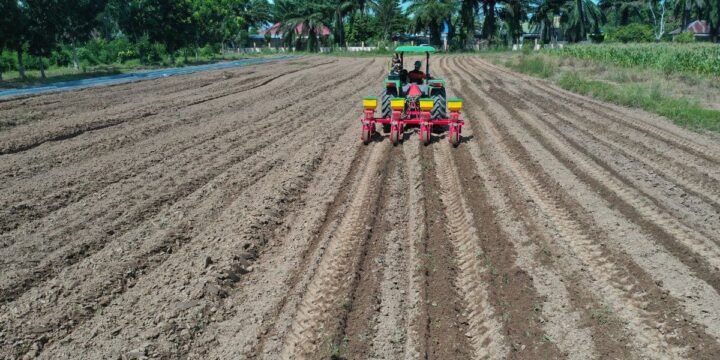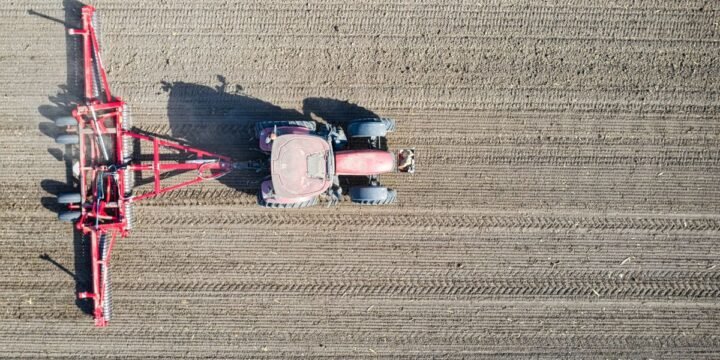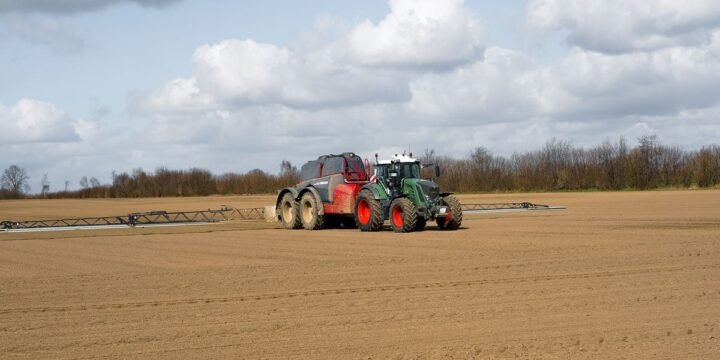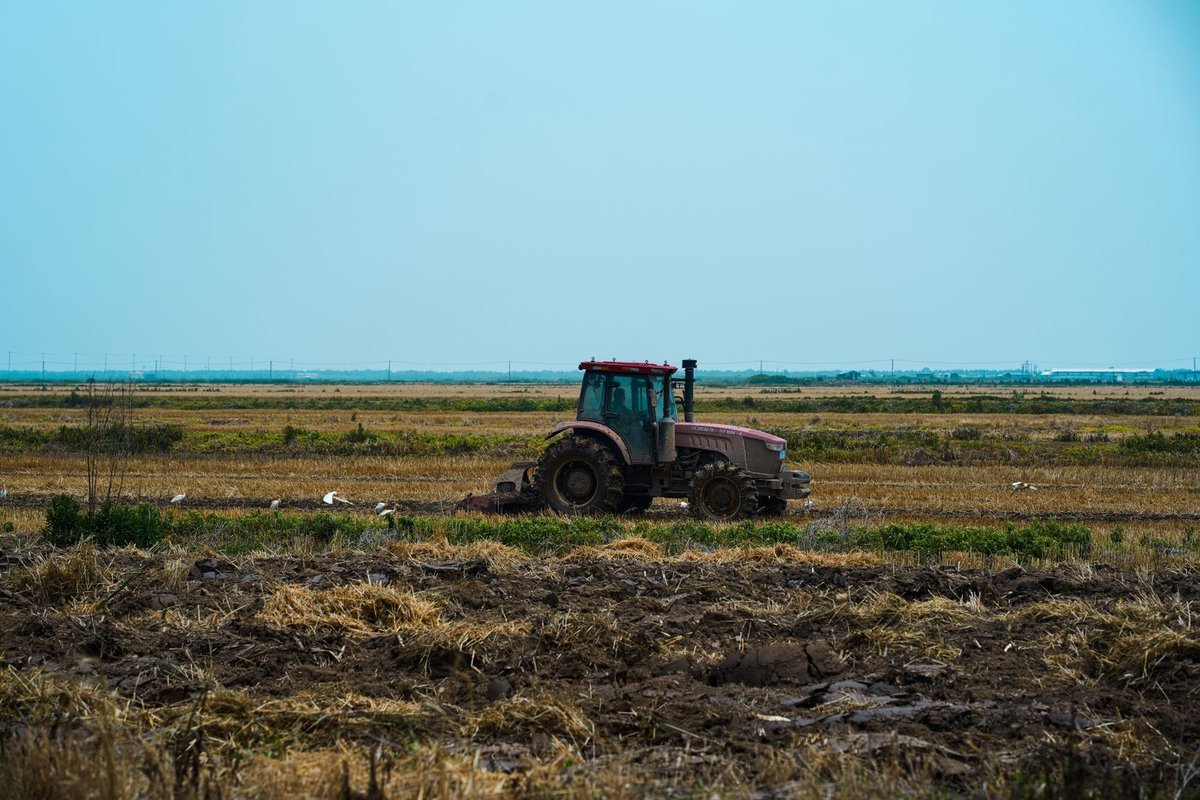
To calculate cost per acre, divide your machine and operator cost per hour by the acres the machine covers per hour, then check the result against the hours and the job total for your field. The same four steps work for every machine type in this guide, from a field cultivator to a combine.
The Four Steps You Repeat for Every Machine
Calculate cost per acre in four steps. First, work out acres per hour from width, speed and efficiency. Second, divide your hourly cost by acres per hour to get cost per acre. Third, divide your field size by acres per hour to get the hours. Fourth, multiply the hours by your hourly cost and add any travel and setup cost to get the job total.
Acres per hour equals width in feet times speed in miles per hour times efficiency divided by 8.25, and 8.25 equals 43560 divided by 5280. Use unrounded rates for later steps and round only at the end.
Every dollar figure below is an example figure at the page example rate of 150 dollars per hour, for a 160 acre field with 0 dollars of travel, unless the text says it is a figure you enter yourself. That rate is an example rate only, explicitly not a market rate.
Calculate Cost Per Acre With the Field Cultivator First
The field cultivator preset, 24 ft wide at 6 mph and 85 percent efficiency, gives 14.84 acres per hour, 10.11 dollars per acre, about 10.8 hours and about 1618 dollars for a 160 acre field, all as example figures at the page example rate.
Worked Table Across Six Machine Types
All dollar figures in this table are example figures at the page example rate of 150 dollars per hour.
| Machine | Width | Speed | Efficiency | Acres per hour | Cost per acre | Hours for 160 acres | Job cost for 160 acres |
|---|---|---|---|---|---|---|---|
| Field cultivator | 24 ft | 6 mph | 85 percent | 14.84 | $10.11 | 10.78 | $1,617.65 |
| Disc harrow | 14 ft | 5 mph | 80 percent | 6.79 | $22.10 | 23.57 | $3,535.71 |
| Grain drill | 15 ft | 5.5 mph | 75 percent | 7.50 | $20.00 | 21.33 | $3,200.00 |
| Row planter | 30 ft | 5.5 mph | 75 percent | 15.00 | $10.00 | 10.67 | $1,600.00 |
| Boom sprayer | 60 ft | 10 mph | 85 percent | 61.82 | $2.43 | 2.59 | $388.24 |
| Combine | 30 ft header | 4.5 mph | 75 percent | 12.27 | $12.22 | 13.04 | $1,955.56 |
Read the table from the acres per hour column. Cost per acre is the same example hourly cost divided by acres per hour, so the machine that covers the most acres per hour shows the lowest cost per acre. The boom sprayer covers 61.82 acres per hour, so its cost per acre is 2.43 dollars as an example figure at the page example rate.
Tillage Worked Step by Step With the Disc Harrow
The disc harrow preset, 14 ft at 5 mph and 80 percent efficiency, gives 6.79 acres per hour, 22.10 dollars per acre, 23.57 hours and 3535.71 dollars for a 160 acre field, all as example figures at the page example rate.
Planting Worked Step by Step With the Grain Drill and Row Planter
Grain drill: 15 ft at 5.5 mph and 75 percent efficiency gives 7.50 acres per hour, 20.00 dollars per acre, 21.33 hours and 3200.00 dollars for a 160 acre field, all as example figures at the page example rate.
Row planter: 30 ft at 5.5 mph and 75 percent efficiency gives 15.00 acres per hour, 10.00 dollars per acre, 10.67 hours and 1600.00 dollars for a 160 acre field, all as example figures at the page example rate. Double the width doubles the acres per hour, halves the hours, and halves the cost per acre. Seed cost is not in this calculator, so no seed figure is added here.
Spraying Worked Step by Step With the Boom Sprayer
The boom sprayer preset, 60 ft at 10 mph and 85 percent efficiency, gives 61.82 acres per hour, 2.43 dollars per acre, 2.59 hours and 388.24 dollars for a 160 acre field, all as example figures at the page example rate.
Chemical cost is not in this calculator, so no chemical figure is added here.
Harvest Worked Step by Step With the Combine
The combine preset, 30 ft header at 4.5 mph and 75 percent efficiency, gives 12.27 acres per hour, 12.22 dollars per acre, 13.04 hours and 1955.56 dollars for a 160 acre field, all as example figures at the page example rate.
The combine sits in the middle of the table: at 12.27 acres per hour it covers less ground than the cultivator at 14.84, so the same example hourly cost spreads across fewer acres.
A Worked Example for a Mower Preset
The same four steps work for the mower presets, which show what happens when width and speed are both small. The zero turn mower preset is 60 in, which is 5 ft, at 7 mph and 85 percent efficiency. Step one: 5 times 7 times 0.85 equals 29.75, and 29.75 divided by 8.25 equals 3.606061, shown as 3.61 acres per hour. Step two: 150 divided by 3.606061 equals 41.5966, shown as 41.60 dollars per acre as an example figure at the page example rate. Step three: 160 divided by 3.606061 equals 44.3697 hours, shown as 44.37 hours. Step four: 44.3697 times 150 equals 6655.46 dollars.
The riding mower preset is 48 in, which is 4 ft, at 5 mph and 80 percent efficiency. It gives 1.94 acres per hour and 77.34 dollars per acre as an example figure at the page example rate, with 82.50 hours and 12375.00 dollars for a 160 acre field. The zero turn mower covers more acres per hour because it is wider and faster, so its cost per acre is lower at the same example rate. Both mowers are built for lawns and small areas, not for 160 acre fields, so read these job totals as arithmetic from the formula, not as a price for mowing a field.
A Note on the Bush Hog Preset in This Calculator
The bush hog preset on this calculator is 6 ft wide, 4.5 mph, and 75 percent efficiency. Step one: 6 times 4.5 times 0.75 equals 20.25, and 20.25 divided by 8.25 equals 2.454545, shown as 2.45 acres per hour. Step two: 150 divided by 2.454545 equals 61.11 dollars per acre as an example figure at the page example rate. A 160 acre field at that rate takes 65.19 hours and costs 9777.78 dollars.
A 20 acre field at 2.45 acres per hour takes about 8.2 hours, since 20 divided by 2.45 equals 8.163265, which rounds to 8.2 hours. For the full guide, see the live guide on bush hogging cost per acre.
How to Use Your Own Hourly Cost
The example rate in this guide is only a stand in for your own cost. Build your hourly cost first, then run the same four steps with your figure in place of the example rate. The calculator page lists what belongs in that hourly cost: fuel and lubricants, repairs and maintenance, ownership costs such as depreciation, interest, insurance and housing, labour, and overheads such as trucks, tools and admin.
No dollar figure for any of those parts is given on the calculator page, so no part is priced here. Add up your own records for each part and enter the total as your hourly cost. Enter your own rate in the Cost Per Acre Calculator and the four steps will give you your own cost per acre, hours and job total.
How Efficiency Changes the Answer
Efficiency is the share of working time spent covering new ground, after turns, overlap and stops. Small or irregular fields use 55 to 65 percent. Average fields use 70 to 75 percent. Large rectangular fields use 80 to 85 percent. Ideal fields with GPS guidance use 85 to 90 percent. The calculator page FAQ says to use 75 to 85 percent for most field work. See the guide on understanding field efficiency for the bands in full.
Efficiency moves cost per acre in inverse proportion, because it sits in the divisor of acres per hour. Cut the efficiency from 85 percent to 75 percent and acres per hour fall by 11.8 percent, from 14.84 to 13.09, while cost per acre rises by 13.3 percent, from 10.11 dollars to 11.46 dollars, both as example figures at the page example rate. The rise is larger than the fall, because the same hourly cost spreads over fewer acres.
Check Your Answer Before You Quote It
Check every result with a second sum before you use it. First, check the hours: a 20 acre field at 2.45 acres per hour takes about 8.2 hours, so very different hours for a similar rate mean one input is wrong. Second, check the job total two ways: cost per acre times acres, and hours times hourly cost, should agree. Third, check the cost per acre against the table in this guide: a result far from the table row for your machine means width, speed, efficiency or hourly cost is wrong.
If you want the rate behind the cost, the guide on how to calculate acres per hour explains the acres per hour step on its own. Spend your time on the inputs, because a wrong width, a hopeful speed or a generous efficiency moves the answer far more than a rounding choice ever will.
Frequently Asked Questions
Q: How do I calculate cost per acre step by step?
A: First work out acres per hour from width, speed and efficiency divided by 8.25. Second divide your hourly cost by acres per hour to get cost per acre. Third divide field size by acres per hour to get hours. Fourth multiply hours by hourly cost and add travel to get the job total.
Q: What figures do I need before I start?
A: You need working width in feet, travel speed in miles per hour, field efficiency as a percent, field size in acres, and your machine plus operator cost per hour.
Q: Why does the same hourly cost give a different cost per acre for each machine?
A: Because cost per acre is hourly cost divided by acres per hour, and acres per hour changes with width, speed and efficiency. A machine that covers more acres per hour spreads the same hourly cost across more acres, so its cost per acre is lower.
Q: Which machine in the table has the lowest cost per acre at the example rate?
A: The boom sprayer, at 2.43 dollars per acre as an example figure at the page example rate. It is the widest and fastest preset, at 60 ft and 10 mph, so it covers 61.82 acres per hour.
Q: Why is the disc harrow dearer per acre than the field cultivator at the same example rate?
A: Because the disc harrow covers 6.79 acres per hour against the cultivator at 14.84. At the same example rate of 150 dollars per hour, the slower coverage gives 22.10 dollars per acre against 10.11 dollars per acre, both example figures at the page example rate.
Q: Can I compare my cost per acre with a contractor rate?
A: Yes. Compare your own cost per acre with local custom rate surveys to decide whether to own equipment or hire a contractor. If a contractor rate is below your own cost per acre, hiring may make sense, as long as timeliness does not suffer.
Work the Method on Your Own Field Next
Calculate cost per acre the same way for every machine you own or hire: width, speed and efficiency give acres per hour, hourly cost divided by acres per hour gives cost per acre, and field size and hours give the job total. Run your own figures through the Cost Per Acre Calculator and compare the result with the table.