Use the planning range for your operation, then move down for a small field and up for a large open field. What field efficiency should I use depends on the job, because spraying, planting, tillage, combining and mowing lose time in different ways. This guide gives the table, the reasons, and worked rates.
Table of Contents
How to Read the Table
Field efficiency is the share of field time spent covering new ground. The rest goes to turns, overlap, refills, unloading and slower travel on rough ground. Acres per hour equals width in feet times speed in miles per hour times efficiency, divided by 8.25. Hectares per hour equals width in metres times speed in kilometres per hour times efficiency, divided by 10. The constant 8.25 comes from 43560 divided by 5280. The table gives a planning range for each operation, not a fixed standard. The range is the full spread across the named sources. Spraying shows this best. Plant Calculator gives 85 to 90 percent for large field broadcast spraying. Pro Calculator Tools gives 65 to 80 percent. NovaCalculator gives 55 to 65 percent in its ASABE list. They describe different setups, tank sizes and field sizes. If you are unsure, start at the lower end.
The Table by Operation
| Operation | Planning range | Main time loss | What the named sources say |
|---|---|---|---|
| Spraying | 55 to 90 percent | Tank refills and headland turns | Plant Calculator 85 to 90 percent for large field broadcast spraying, Pro Calculator Tools 65 to 80 percent, NovaCalculator 55 to 65 percent |
| Planting | 55 to 85 percent | Seed and fertiliser refills and careful speed | Plant Calculator 70 to 80 percent, Pro Calculator Tools 70 to 85 percent, NovaCalculator 55 to 70 percent |
| Primary tillage | 75 to 90 percent | Turns and slower travel on rough ground | Plant Calculator 80 to 85 percent, Pro Calculator Tools 80 to 90 percent, NovaCalculator plowing 75 to 85 percent and disking 79 to 85 percent |
| Combining | 60 to 75 percent | Grain unloading and slower travel in heavy crop | Plant Calculator 65 to 75 percent, Pro Calculator Tools harvesting 60 to 75 percent, NovaCalculator 60 to 70 percent |
| Mowing open pasture | 75 to 85 percent | Turns on short passes and rough ground | NovaCalculator 75 to 85 percent, acresperhourcalculator.net 75 to 85 percent for mowing open pasture with a wide cutter |
| Mowing lawns and small lots | 55 to 70 percent | Trees, beds, trimming and many turns | acresperhourcalculator.net 55 to 70 percent for mowing lawns with trees, beds and trimming |
| Baling | 70 to 80 percent | Bale handling and stops to clear blockages | NovaCalculator 70 to 80 percent |
Spraying
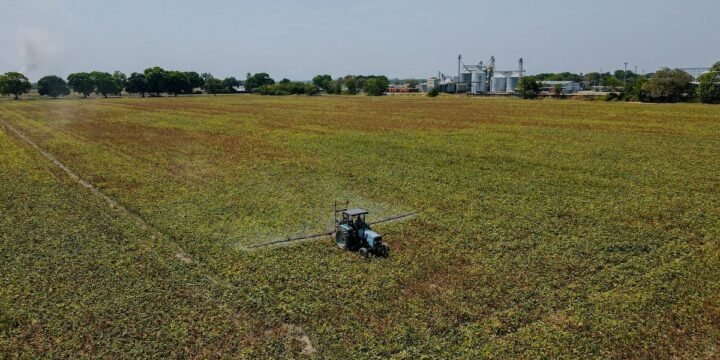
Spraying is fast and variable. A wide boom gives a high theoretical rate, but the real rate depends on how often the tank runs dry. A 90 foot boom at 12 miles per hour and 65 percent covers 85.1 acres per hour. The calculation is 90 times 12 times 0.65 divided by 8.25. That 65 percent figure is from acresperhourcalculator.net, where refills are frequent. At 85 percent the same boom covers 111.27 acres per hour. Use the top only for a large open field, a large tank and long passes. Use the bottom for a small field, a small tank, or frequent nozzle checks. A 60 foot boom at 8 miles per hour and 85 percent covers 49.5 acres per hour, about 396 acres in an 8 hour day.
Planting
Planting loses time to seed and fertiliser refills, careful speed, and turns to keep rows straight. Pro Calculator Tools gives 4 to 5 miles per hour as typical planting speed, and NovaCalculator gives 4 to 6 miles per hour and notes that precision is critical. A 30 foot planter at 5 miles per hour and 70 percent covers 12.7 acres per hour. The calculation is 30 times 5 times 0.70 divided by 8.25. A 160 acre field takes 12.6 hours at that rate. Plant Calculator gives 70 to 80 percent for row crops, Pro Calculator Tools gives 70 to 85 percent, and NovaCalculator gives 55 to 70 percent. Use 70 percent for an average field. Move down for short rows and frequent refills.
Primary Tillage
Tillage has the narrowest and highest range in the table. The work is steady and stops are fewer than in planting or spraying. The main losses are turns and slower travel on rough ground. Plant Calculator gives 80 to 85 percent for primary tillage in an open field. Pro Calculator Tools gives 80 to 90 percent. NovaCalculator gives 75 to 85 percent for moldboard plowing and 79 to 85 percent for disking. A 20 foot disk at 6 miles per hour and 80 percent covers 11.6 acres per hour. The calculation is 20 times 6 times 0.80 divided by 8.25. A 100 acre field takes about 8.6 hours at that rate. Use 80 percent for an average open field. Move down for a small or rough field.
Combining
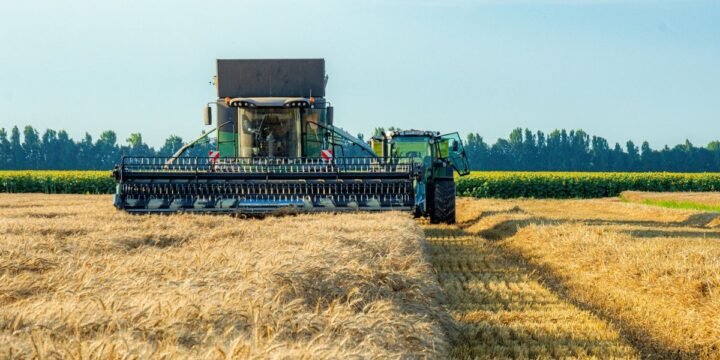
Combining loses time in a way no other operation does. The header covers ground, but the machine must thresh and separate the crop, unload grain, and slow down when the crop is heavy. NovaCalculator gives 2 to 5 miles per hour for combining, depending on crop yield. A 30 foot header at 3.5 miles per hour and 70 percent covers 8.9 acres per hour. The calculation is 30 times 3.5 times 0.70 divided by 8.25. A 100 acre field takes about 11.2 hours at that rate. Plant Calculator gives 65 to 75 percent for combining, Pro Calculator Tools gives 60 to 75 percent for harvesting, and NovaCalculator gives 60 to 70 percent. Use 70 percent for an average field and crop, and move down toward 60 percent for a heavy crop.
Mowing
Mowing splits into two jobs, and the table keeps them separate. Mowing open pasture with a wide cutter is steady work with long passes and few stops. NovaCalculator gives 75 to 85 percent for mowing, and acresperhourcalculator.net gives 75 to 85 percent for mowing open pasture with a wide cutter. A 6 foot cutter at 4.5 miles per hour and 75 percent covers 2.45 acres per hour. The calculation is 6 times 4.5 times 0.75 divided by 8.25. At that rate, 20 acres takes 20 divided by 2.45, which equals 8.16 hours, so about 8.2 hours. Use 75 percent for open pasture. Mowing lawns and small lots is different. Trees, beds, trimming, gates and many turns break up every pass. Acresperhourcalculator.net gives 55 to 70 percent for mowing lawns with trees, beds and trimming. A 20 foot brush mower at 6 miles per hour and 65 percent gives 9.45 acres per hour.
Baling
Baling has the smallest range in the table, because only NovaCalculator gives an ASABE range for it, at 70 to 80 percent. The main losses are bale handling and stops to clear blockages. A baler does not refill a tank or unload grain, but it stops when a bale is tied and dropped, and when material blocks the pickup. Use 70 percent for an average field. Move down if the crop is heavy and blockages are frequent, and up toward 80 percent only for a light crop on a large open field with long passes. If your timed rate sits outside 70 to 80 percent, trust your own figure for that field and crop.
How Field Shape Moves You Inside the Range
Pick the operation first, then move inside its range for the field. A large rectangular field moves you up. A small or irregular field moves you down. The live efficiency guide gives the shape bands: 55 to 65 percent for small or irregular fields, 70 to 75 percent for average fields, 80 to 85 percent for large rectangular fields, and 85 to 90 percent for an ideal field with GPS guidance. Take planting, with a range of 55 to 85 percent. On a large rectangle, start near 80 percent. On a small irregular field, start near 60 percent. If you are unsure, start at the lower end.
Worked Comparison: One Field, Three Operations
Work the same 100 acre field through three operations, using the rates already worked above. Tillage with a 20 foot disk at 6 miles per hour and 80 percent covers 11.6 acres per hour, and 100 acres takes about 8.6 hours. Planting with a 30 foot planter at 5 miles per hour and 70 percent covers 12.7 acres per hour, and 100 acres takes about 7.9 hours. Combining with a 30 foot header at 3.5 miles per hour and 70 percent covers 8.9 acres per hour, and 100 acres takes about 11.2 hours. The planter is faster than the disk here because its width is larger. Width, speed and efficiency set the rate together. Use the calculator on the homepage to run the same comparison for your own outfit.
What Field Efficiency Should I Use: Pick a Starting Point
Find your operation in the table and read its range and main time loss. Look at the field and decide whether it is small or irregular, average, large and rectangular, or ideal with GPS guidance, using the bands in the live guide to understanding field efficiency. Move inside the range to match the field. Work the rate with the formula, divide the acres by the rate to get the hours, and write the efficiency beside the rate. Then test it on a real job. Time a known field from the hour meter, divide acres by hours to get the real rate, then divide the real rate by the theoretical rate to get your true efficiency. The theoretical rate is width times speed divided by 8.25. If it sits outside, keep your own figure for that field and operation.
Common Mistakes and Limitations
First, do not use one efficiency for every operation. Tillage at 80 percent and combining at 70 percent are different jobs. Second, do not plan from the top of a range. The top of the spraying range is 90 percent. Third, do not use machine width instead of working width. Fourth, do not use top speed instead of average speed. Fifth, do not count overlap twice. Efficiency already counts overlap, so a reduced width plus a lower efficiency counts the same loss twice. Sixth, do not treat a planning range as a fixed standard. Seventh, do not leave travel, breakdowns and weather out of the day plan. The rate covers field time only. The guide on how to calculate acres per hour works through the formula slowly.
Frequently Asked Questions
Q: What field efficiency should I use for spraying?
A: Use 55 to 90 percent. Start near 65 percent if refills are frequent, or near 85 percent if the field is large.
Q: What field efficiency should I use for planting?
A: Use 55 to 85 percent. Start at 70 percent for an average field.
Q: What field efficiency should I use for tillage?
A: Use 75 to 90 percent. Start at 80 percent for an average open field.
Q: What field efficiency should I use for combining?
A: Use 60 to 75 percent. Start at 70 percent for an average field and crop.
Q: What field efficiency should I use for mowing?
A: Use 75 to 85 percent for open pasture, and 55 to 70 percent for lawns.
Q: How do I know if the efficiency I picked was right?
A: Time a known field, divide acres by hours to get the real rate, then divide that rate by the theoretical rate.
Plan From the Operation, Not From a Single Number
No single efficiency fits every job. Spraying, planting, tillage, combining and mowing lose time in different ways, and the field adds its own loss on top. Use the table to find your operation, move inside its range for your field, and work the rate with width, speed and efficiency. Run your own numbers through the Acres Per Hour Calculator before the next job.