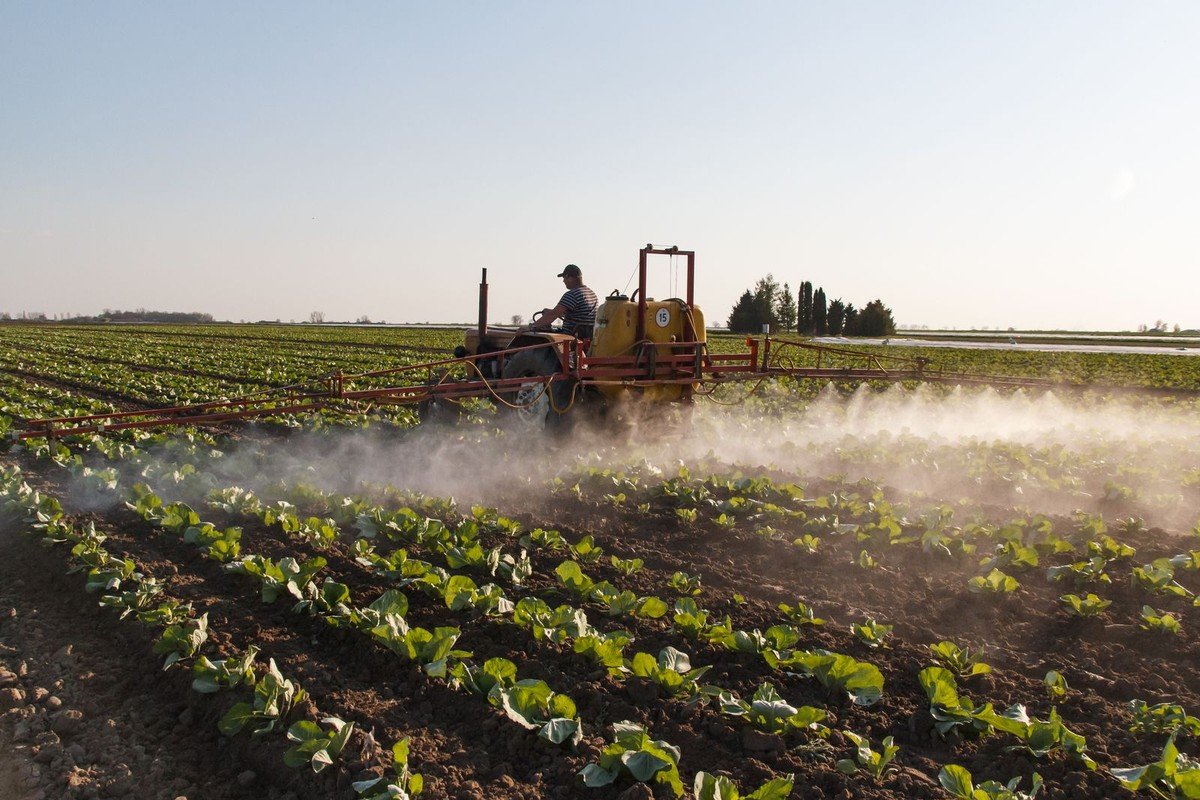
Spraying speed by sprayer type runs from 6 miles per hour for an ATV sprayer to 14 miles per hour for a self propelled sprayer. Each speed below turns into acres per hour with its boom width and efficiency. An ATV sprayer covers 7.64 acres per hour, while a 120 foot self propelled sprayer covers 173.09 acres per hour.
Why Speed Alone Does Not Tell the Whole Story
Speed is the number most people ask about first, because it feels like the whole answer. Yet speed on its own does not give acres per hour. A narrow boom at high speed can still cover less ground than a wide boom at a steady speed, and a wide boom on a small field can lose much of its advantage to turning and refilling.
Boom width sets how much ground each pass covers. Speed sets how fast each pass moves. Efficiency sets how much of the working time is spent spraying, rather than turning or filling. Change any one part and the acres per hour changes with it.
Spraying Speed by Sprayer Type: The Verified Table
The verified five row table reads from left to right: sprayer type, boom width in feet, speed in miles per hour, efficiency as a percent, and acres per hour worked out from the formula. The speeds are 6, 8, 10, 12 and 14 miles per hour, and the boom widths run from 15 feet to 120 feet. Efficiency rises from 70 percent for the ATV sprayer to 85 percent for the self propelled sprayers.
| Sprayer type | Boom width | Speed | Efficiency | Acres per hour |
|---|---|---|---|---|
| ATV UTV sprayer | 15 ft | 6 mph | 70 percent | 7.64 |
| 3 point pull type sprayer | 40 ft | 8 mph | 75 percent | 29.09 |
| Pull type sprayer | 60 ft | 10 mph | 80 percent | 58.18 |
| Self propelled sprayer | 90 ft | 12 mph | 85 percent | 111.27 |
| Self propelled sprayer | 120 ft | 14 mph | 85 percent | 173.09 |
The jump between rows is large. A 3 point sprayer covers 29.09 acres per hour, about 3.8 times the ATV rate. A pull type sprayer covers 58.18 acres per hour, about 7.6 times the ATV rate. A 120 foot self propelled sprayer covers 173.09 acres per hour, about 22.7 times the ATV rate, yet it is only about 2.3 times as fast. The rest of the gap comes from boom width and efficiency.
The Formula Behind Every Speed
Acres per hour is boom width in feet times speed in miles per hour times efficiency, divided by 8.25. The constant 8.25 equals 43560 divided by 5280. Efficiency is written as a decimal, so 85 percent becomes 0.85 and 70 percent becomes 0.70. Boom width is the working width, the strip the sprayer actually covers on each pass, after overlap. Speed is the average speed you can hold safely while the spray stays even.
A 60 foot pull type sprayer at 10 miles per hour and 80 percent efficiency gives 60 times 10 times 0.80, which equals 480, divided by 8.25, which equals 58.18 acres per hour. A 20 acre field at 2.45 acres per hour takes about 8.2 hours, worked out from the unrounded rate, not 8.1 hours. Run your own numbers through the Spraying Acres Per Hour Calculator. The how to calculate acres per hour guide gives the formula in full.
What Each Speed Means in the Field
An ATV sprayer at 6 miles per hour is a small area tool. Its 15 foot boom and 70 percent efficiency give 7.64 acres per hour, which suits a small property, a pasture, or a field with tight access where a larger sprayer cannot turn.
A 3 point pull type sprayer at 8 miles per hour is the next step up. Its 40 foot boom and 75 percent efficiency give 29.09 acres per hour. This is a tractor drawn sprayer for a medium field, and a 20 acre field takes about 0.69 hours at this rate, or about 41 minutes, before refills and travel.
A pull type sprayer at 10 miles per hour, with a 60 foot boom and 80 percent efficiency, gives 58.18 acres per hour. This is the worked example on the live calculator page. A 20 acre field takes about 0.34 hours at this rate, or about 21 minutes, before refills and travel.
A 90 foot self propelled sprayer at 12 miles per hour and 85 percent efficiency gives 111.27 acres per hour. A 120 foot self propelled sprayer at 14 miles per hour and 85 percent efficiency gives 173.09 acres per hour. A 20 acre field takes about 0.18 hours with the 90 foot machine and about 0.12 hours with the 120 foot machine, before refills and travel.
How Long a 20 Acre Field Takes at Each Speed
Spraying time is field size divided by acres per hour, worked out from the unrounded rate, with the final value rounded only at the end. The table below gives spraying time for a 20 acre field at each verified row. These times are spraying time only, and do not include filling or turning.
| Sprayer type | Acres per hour | Time for 20 acres |
|---|---|---|
| ATV UTV sprayer | 7.64 | About 2.62 hours |
| 3 point pull type sprayer | 29.09 | About 0.69 hours |
| Pull type sprayer | 58.18 | About 0.34 hours |
| Self propelled sprayer 90 ft | 111.27 | About 0.18 hours |
| Self propelled sprayer 120 ft | 173.09 | About 0.12 hours |
A 20 acre field takes about 2.62 hours with an ATV sprayer, and about 0.12 hours with a 120 foot self propelled sprayer. The fastest sprayer is not always the right choice. A field with tight corners, wet ground, or narrow access may not let a 120 foot boom turn safely, so choose the sprayer by the field and the access first. The guide on how many acres a sprayer can spray per hour gives the same rates by boom width, and the refill guide at sprayer acres per hour and refill time shows how filling time pulls the real output below the spraying rate.
Speed and Application Rate: The Rate Control Warning
Speed changes the application rate unless the sprayer has rate control. That warning comes from the live calculator page, and it is the most important safety point in this guide. If you drive faster, the same nozzle output spreads over more ground, so the gallons per acre fall. If you drive slower, the gallons per acre rise. A sprayer with rate control senses the speed and changes the flow, so the rate stays steady. A sprayer without rate control does not, so the operator must hold a steady speed or recalibrate.
Always calibrate, follow the product label for rate, nozzle and weather conditions, and observe buffer zones and local regulations. No label rate, nozzle specification, weather limit or regulation is stated in this guide, because those values belong to the product label and to local rules. Do not guess a rate from a speed table.
How Field Shape Changes the Speed You Can Hold
Efficiency is where field shape enters the calculation. The site bands are 55 to 65 percent for small or irregular fields, 70 to 75 percent for average fields, 80 to 85 percent for large rectangular fields, and 85 to 90 percent for ideal fields with GPS guidance. The ideal band is 85 to 90 percent, never 88 to 90 percent. A long rectangular field lets a sprayer hold its speed, so efficiency sits high. A small field with short passes and many turns forces the sprayer to slow more often, so efficiency sits low.
The verified table already reflects this pattern: the ATV sprayer sits at 70 percent, the 3 point sprayer at 75 percent, the pull type sprayer at 80 percent, and the self propelled sprayers at 85 percent. Pick the band that matches your field shape, then use the guide on understanding field efficiency to check your choice.
How Much Speed Alone Changes the Rate
To see the effect of speed on its own, hold boom width and efficiency steady and change only the speed. The table below uses a 60 foot boom at 80 percent efficiency, the same width and efficiency as the verified pull type row, at speeds from 6 to 14 miles per hour. Every figure was recalculated from the formula.
| Speed | Acres per hour at 60 ft and 80 percent |
|---|---|
| 6 mph | 34.91 |
| 8 mph | 46.55 |
| 10 mph | 58.18 |
| 12 mph | 69.82 |
| 14 mph | 81.45 |
At 6 miles per hour, the 60 foot boom covers 34.91 acres per hour. At 14 miles per hour, the same boom covers 81.45 acres per hour. Speed rises by about 2.3 times across that range, and acres per hour rises by the same factor, because width and efficiency stay fixed.
Choosing a Speed You Can Hold Safely
Choose a speed you can hold for a full pass, not a speed you can reach for a few seconds on a straight run. A steady speed gives an even application and a predictable time for the field. Start with the speed in the verified table for your sprayer type, then adjust it down for your field. Short passes, soft ground, or a crosswind are all reasons to slow down.
Check your speed in the field, not only on the dashboard. Wheel slip, a soft patch, or a slope can make the ground speed differ from the speed shown, so time a known pass and work out the real speed from the distance and the time. If the real speed sits below the table speed, use the real speed in the formula and rework the acres per hour.
Frequently Asked Questions
Q: What is the spraying speed of an ATV sprayer?
A: An ATV sprayer runs at 6 miles per hour in the verified table, with a 15 foot boom and 70 percent efficiency, covering 7.64 acres per hour.
Q: What is the spraying speed of a self propelled sprayer?
A: A self propelled sprayer runs at 12 miles per hour with a 90 foot boom and 85 percent efficiency, covering 111.27 acres per hour, and at 14 miles per hour with a 120 foot boom and 85 percent efficiency, covering 173.09 acres per hour.
Q: What is the spraying speed of a pull type sprayer?
A: A pull type sprayer runs at 10 miles per hour in the verified table, with a 60 foot boom and 80 percent efficiency, covering 58.18 acres per hour. A 3 point pull type sprayer runs at 8 miles per hour, with a 40 foot boom and 75 percent efficiency, covering 29.09 acres per hour.
Q: Does driving faster change the spray rate?
A: Yes, unless the sprayer has rate control. Always calibrate, follow the product label for rate, nozzle and weather conditions, and observe buffer zones and local regulations.
Q: How long does it take to spray 20 acres?
A: An ATV sprayer takes about 2.62 hours, a 3 point pull type sprayer about 0.69 hours, a pull type sprayer about 0.34 hours, a 90 foot self propelled sprayer about 0.18 hours, and a 120 foot self propelled sprayer about 0.12 hours, before filling or travel.
Q: What field efficiency should I use for spraying?
A: Use 55 to 65 percent for small or irregular fields, 70 to 75 percent for average fields, 80 to 85 percent for large rectangular fields, and 85 to 90 percent for ideal fields with GPS guidance.
Plan Your Next Spray Pass From Speed and Width
Spraying speed by sprayer type runs from 6 miles per hour for an ATV sprayer to 14 miles per hour for a large self propelled sprayer, and the acres per hour runs from 7.64 to 173.09 across the same five rows. Speed matters, but width and efficiency matter just as much. Use the table to pick the row that matches your sprayer, use the formula to adjust it for your field, and check the result in the field. Work out your own numbers with the Spraying Acres Per Hour Calculator or start from the acres per hour calculator homepage before the next job.