How many acres can a tractor cover per hour depends on implement width, ground speed and field efficiency, so there is no single tractor rate. A 6 ft rotary cutter at 4.5 mph and 75 percent efficiency covers 2.45 acres per hour. Use the inputs in this guide to build an estimate for your own tractor and implement.
Table of Contents
Why there is no single tractor rate
A tractor on its own does not cover acres. The implement behind it does the work, and the tractor supplies the pull to keep it moving at a steady speed. Change the implement and the answer changes, even if the tractor stays the same. A narrow cutter and a wide sprayer can differ by more than fifty times, because width is the largest lever in the formula.
Speed matters only at the speed you can hold safely while the work stays good. Turns, overlap, refills and obstacles take time when no new ground is covered. Think of the answer as a range tied to a job, not a rating tied to a tractor.
The formula in plain terms
Acres per hour equals width in ft times speed in mph times efficiency divided by 8.25. Hectares per hour equals width in m times speed in km per hour times efficiency divided by 10. Efficiency is written as a decimal, so 75 percent becomes 0.75 and 85 percent becomes 0.85.
Working width is the strip worked on each pass, minus overlap. Speed is the average speed held safely, not the top speed in the manual. Efficiency is the share of time spent covering new ground. Bands here are 55 to 65 percent for small fields, 70 to 75 percent for average fields, 80 to 85 percent for large fields, and 85 to 90 percent for ideal fields with GPS guidance. Try the free acres per hour tool and the guide on how to calculate acres per hour.
How Many Acres Can a Tractor Cover Per Hour in Common Jobs
The table below uses figures from the live equipment chart on this site. Every row states width, speed and efficiency, so you can check the result with the formula.
| Job | Width | Speed | Efficiency | Acres per hour |
|---|---|---|---|---|
| Zero turn mower | 5 ft | 7 mph | 85 percent | 3.61 |
| Rotary cutter | 6 ft | 4.5 mph | 75 percent | 2.45 |
| Batwing cutter | 15 ft | 5 mph | 75 percent | 6.82 |
| Disc mower | 9 ft | 7 mph | 80 percent | 6.11 |
| Rotary tiller | 6 ft | 2.5 mph | 75 percent | 1.36 |
| Disc harrow | 14 ft | 5 mph | 80 percent | 6.79 |
| Field cultivator | 24 ft | 6 mph | 85 percent | 14.84 |
| Grain drill | 15 ft | 5.5 mph | 75 percent | 7.50 |
| Row planter | 30 ft | 5.5 mph | 75 percent | 15.00 |
| Pull type sprayer | 60 ft | 10 mph | 80 percent | 58.18 |
| Combine | 30 ft | 4.5 mph | 75 percent | 12.27 |
Use the table as a starting point, not a promise. If your field is small or rough, use a lower efficiency. If your speed is lower than the table speed, your rate falls in direct proportion. The equipment chart has more rows, including a 120 ft sprayer and a 40 ft combine.
Mowing and cutting
A 6 ft rotary cutter at 4.5 mph and 75 percent efficiency covers 2.45 acres per hour. A 20 acre pasture at that rate takes about 8.2 hours of field time, before travel and breaks. A wider cutter lifts the rate fast. A 15 ft batwing cutter at 5 mph and 75 percent efficiency covers 6.82 acres per hour, even though the speed is only slightly higher. A 9 ft disc mower at 7 mph and 80 percent efficiency covers 6.11 acres per hour. Mowing efficiency often sits in the middle range, because trees, fences and turns interrupt the work. On a small property, 65 percent or lower is more honest.
Tilling and cultivating
A 6 ft rotary tiller at 2.5 mph and 75 percent efficiency covers only 1.36 acres per hour. That low speed is normal for tillage. Wider tillage tools change the picture. A 14 ft disc harrow at 5 mph and 80 percent efficiency covers 6.79 acres per hour. A 24 ft field cultivator at 6 mph and 85 percent efficiency covers 14.84 acres per hour. The cultivator is more than ten times the tiller rate here, because it is four times wider, more than twice as fast, and used at higher efficiency on large fields. Wet soil, heavy residue and slopes all force a lower speed.
Planting and drilling
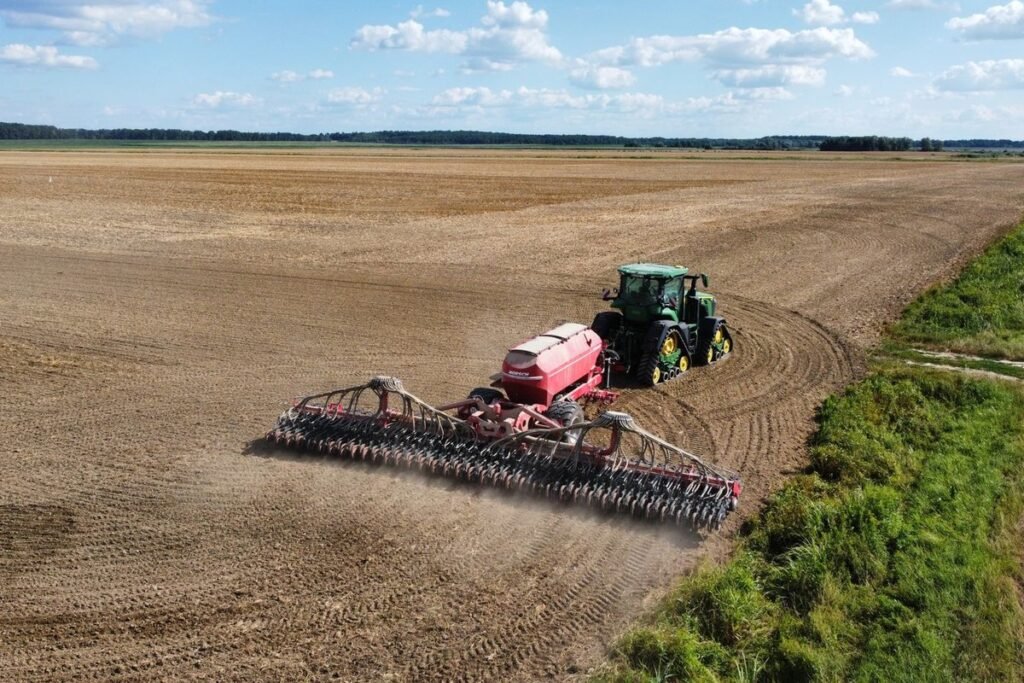
A 15 ft grain drill at 5.5 mph and 75 percent efficiency covers 7.50 acres per hour. A 30 ft row planter at 5.5 mph and 75 percent efficiency covers 15.00 acres per hour. Planting efficiency is often lower than spraying efficiency, because seed refills interrupt the work. A small field may run closer to 65 percent. At 15.00 acres per hour, a 150 acre field takes 10 hours. At 65 percent, the same planter covers 13.00 acres per hour, and the same field takes about 11.5 hours.
Spraying
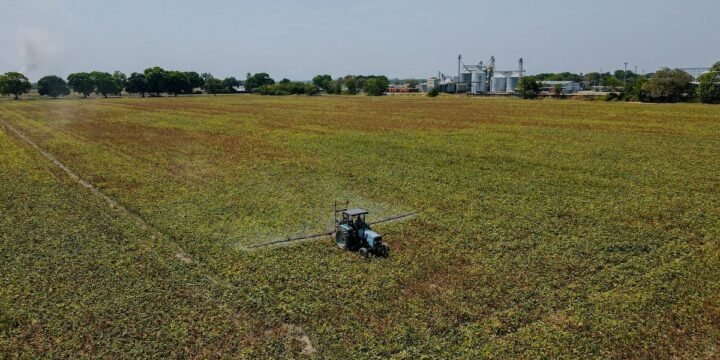
A 60 ft pull type sprayer at 10 mph and 80 percent efficiency covers 58.18 acres per hour. That is more than twenty times the rotary cutter rate in the opening example, even though both jobs use a tractor. The high rate depends on logistics. A sprayer that stops often to refill, or that works small fields with many turns, will not hold 80 percent efficiency. On a large rectangular field with a nurse tank close by, 80 to 85 percent can be fair. On a small or irregular field, use 70 percent or lower. If wind or terrain force a slower pass, recalculate with the lower speed.
Combining and harvesting
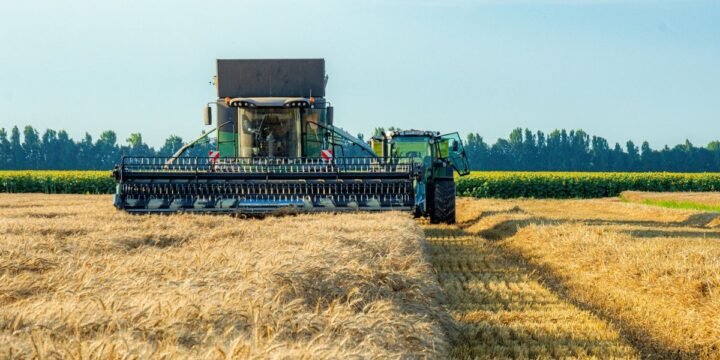
A 30 ft combine at 4.5 mph and 75 percent efficiency covers 12.27 acres per hour. A 40 acre field at that rate takes about 3.3 hours of field time, before unloading delays and travel. Harvesting efficiency is often lower than tillage efficiency on the same field, because the machine must stop or slow to unload grain. A field with a grain cart close by can hold 75 percent. Crop condition also limits speed.
How to build your own estimate
Use five steps, and write each input down so the result can be checked later.
- Measure the working width. Subtract overlap from the strip actually worked.
- Find your real speed. Time a known distance at your normal working pace.
- Pick an efficiency band. Use 55 to 65 percent for small or irregular fields, 70 to 75 percent for average fields, 80 to 85 percent for large rectangular fields, and 85 to 90 percent for ideal fields with GPS guidance. See the field efficiency guide for the full detail on each band.
- Apply the formula. Multiply width by speed, multiply by efficiency as a decimal, then divide by 8.25. For example, 6 times 4.5 times 0.75 divided by 8.25 equals 2.45 acres per hour.
- Turn the rate into time. Divide the field size by acres per hour. A 20 acre field at 2.45 acres per hour takes about 8.2 hours. Add travel, breaks and refills separately.
Read understanding field efficiency and tractor and implement matching for more detail.
What changes the answer
Field size and shape change efficiency more than any other factor. Long rectangular fields need fewer turns per acre, so efficiency rises. Short fields, point rows and odd corners need many turns, so efficiency falls. A wide implement loses more on a small field, because each turn takes a larger share of the hour.
Ground conditions change speed. Wet soil, slopes, rocks, heavy crop and rough ground all force a slower pass. Logistics change efficiency too. Seed, chemical and fuel close to the field keep the machine working.
Operator skill and guidance change overlap and turns. Tractor power changes what speed is possible. A wider implement often has to be pulled more slowly if the tractor cannot hold speed under load. A narrower tool at a good speed can beat a wider tool at a slow speed.
Common mistakes and limitations
The most common mistake is using machine width instead of working width. Measure the worked strip. The next mistake is using top speed. A tractor may reach a high road speed, but it cannot hold that speed while pulling an implement through soil or heavy crop. Use the average working speed from a real pass.
The third mistake is assuming 100 percent efficiency. No real machine works every minute of the hour on new ground. Using 100 percent can overstate the rate by a quarter or more. The fourth mistake is forgetting travel and setup time. Driving between fields, hitching, filling and cleaning are real work, but they are not in acres per hour.
The main limitation is that the formula gives a steady rate for one setup in one field. It does not predict breakdowns or weather delays. Treat the result as a planning estimate, then check it against a timed job.
Turning the rate into a day plan
Divide acres by acres per hour to get field hours, then add travel, breaks, refills and unloading time. A 100 acre field at 12.27 acres per hour takes about 8.1 hours of field time. At 2.45 acres per hour, the same field takes about 40.8 hours, which is a multi day job for one tractor.
Use a range, not a single number, when you quote or schedule. Run the formula at a low efficiency and at a high efficiency, and show both times. That range is more honest than a single optimistic figure. If the range is too wide for a firm quote, time a real job and work out your actual efficiency.
Frequently asked questions
Q: How many acres can a tractor cover per hour with a 6 ft cutter?
A: A 6 ft rotary cutter at 4.5 mph and 75 percent efficiency covers 2.45 acres per hour.
Q: How many acres can a tractor cover per hour when planting?
A: A 30 ft row planter at 5.5 mph and 75 percent efficiency covers 15.00 acres per hour. A 15 ft grain drill at the same speed and efficiency covers 7.50 acres per hour.
Q: Why does the same tractor cover different acres per hour on different jobs?
A: The implement sets the rate. A tractor with a 6 ft cutter covers 2.45 acres per hour in the example above, while the same tractor with a 60 ft sprayer at 10 mph and 80 percent efficiency covers 58.18 acres per hour.
Q: What efficiency should I use for a first estimate?
A: Use 70 to 75 percent for average fields, 55 to 65 percent for small fields, and 80 to 85 percent only for large fields in good conditions.
Q: Can I use the top speed of my tractor in the formula?
A: No. Use the average speed you can hold safely while the implement is working well. Top speed overstates the rate.