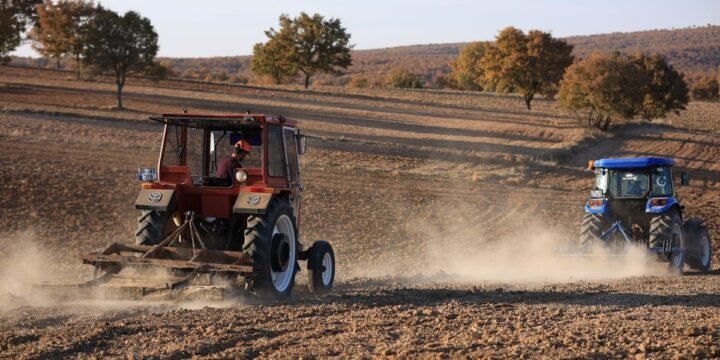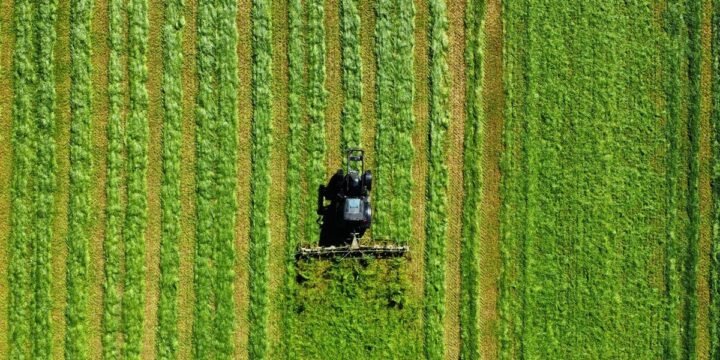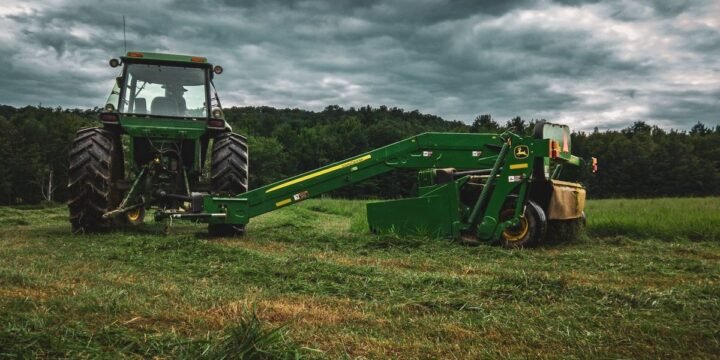
Bush hogging rough pasture vs light grass comes down to speed and efficiency. Light grass with a 6 foot cutter at 4 miles per hour and 75 percent efficiency covers 2.18 acres per hour. Rough pasture with the same cutter at the same speed and 65 percent efficiency covers 1.89 acres per hour. Rough growth often forces slower speed too.
Table of Contents
What Light Grass Means in This Guide
Light grass means short to medium grass that is even, dry enough to cut cleanly, and free of thick stems, woody growth, rocks, and stumps. The field is open, the passes are long, and the operator can see the ground ahead. Light grass is the kind of growth that a rotary cutter can cut in one pass at a steady speed, without bogging down or leaving a large amount of uncut material behind.
Light grass still needs care. Wet light grass can clog the deck and slow the tractor. Short passes and many obstacles can lower efficiency even on light grass. But as a planning case, light grass is the faster case, and it is the case where the higher efficiency figure in the table below fits best. Use light grass as the base case when you plan a regular pasture cut, and move the field toward the rough pasture case if any of those points fails.
What Rough Pasture Means in This Guide
Rough pasture means tall, thick, tangled, or woody growth on uneven ground. It can include tall grass that has gone to seed, briars, thick weeds, light saplings, and patches of dense growth that hide the ground. The surface may be rutted, soft in places, or broken by ditches, rocks, and stumps. The operator cannot hold a steady speed, because the cutter meets more material in some places and hazards in others.
Use rough pasture as the planning case when growth is tall and thick, when the field has not been cut for a long time, when the ground is uneven, or when you know there are rocks, stumps, or ditches in the field. Plan with the lower efficiency figure, and plan for a slower speed as well if the growth is woody or the ground is rough. Walking the field first is how you find the hazards that will force detours, slow the speed, and lower efficiency before the tractor ever starts.
The Formula Behind Both Rates
Acres per hour equals width in feet times speed in miles per hour times efficiency, divided by 8.25. Efficiency is written as a decimal, so 75 percent is 0.75 and 65 percent is 0.65. The constant 8.25 comes from 43560 divided by 5280. Times in this guide use the unrounded rate, and only the final value is rounded.
Bush Hogging Rough Pasture vs Light Grass by Cutter Width
The table below holds speed fixed at 4 miles per hour, so only width and efficiency change. Every row uses the verified rates from the task brief. Light grass uses 75 percent efficiency. Rough pasture uses 65 percent efficiency. Read the light grass column for a regular cut, and the rough pasture column for tall thick growth on uneven ground.
| Cutter width | Rate at 75 percent efficiency | Rate at 65 percent efficiency |
|---|---|---|
| 6 foot | 2.18 acres per hour | 1.89 acres per hour |
| 15 foot | 5.45 acres per hour | 4.73 acres per hour |
Worked Comparison on the Same 20 Acre Field
Take a 20 acre field and a 6 foot cutter at 4 miles per hour. On light grass at 75 percent efficiency, the rate is 2.18 acres per hour. The time is 20 divided by 2.18, which equals 9.17 hours, so about 9.2 hours. That time is cutting time only. It does not include travel, fuel stops, or time spent clearing debris.
Now add the speed effect that rough growth often forces. If rough pasture forces speed down to 3 miles per hour at 65 percent efficiency, the rate is 6 times 3 times 0.65, divided by 8.25, which equals 1.42 acres per hour. The time for 20 acres is 20 divided by 1.42, which equals 14.10 hours, so about 14.1 hours. That is about 4.9 hours longer than the light grass case, and about 3.5 hours longer than the rough pasture case at 4 miles per hour. Do not plan a rough field at the light grass speed. That gap is the heart of bush hogging rough pasture vs light grass on a 20 acre field.
Why Speed Falls on Rough Pasture
Speed is average speed while cutting, not top speed on a clear run. Thick tall woody growth needs slower speeds because the blades meet more material on every pass. If speed stays high, the cutter can leave uncut stems, clog, or force a second pass. A second pass takes more time than a slower first pass, so slowing down is often the faster choice in total.
Why Efficiency Falls on Rough Pasture
Efficiency is the share of the working hour spent covering new ground. On light grass in a large open field, efficiency can sit in the average band of 70 to 75 percent, and on a large rectangular field it can sit in the 80 to 85 percent band. The ideal band on the site is 85 to 90 percent, and that band is for ideal fields with GPS guidance, not for rough pasture.
How the Cut Looks Different
Light grass leaves a more even cut, because the blades meet even material at a steady speed. Rough pasture leaves a coarser cut, with stems cut at different heights and with more material left on the ground. That is normal for a rotary cutter on rough ground. A bush hog is built for rough cutting, not for a lawn finish, and the finish on rough pasture will show it.
Choosing the Right Rate for Your Field
Start by walking the field and naming each part light or rough. Do not give the whole field one label if the ground changes across it. A field can have a light open center and a rough edge, or a rough hollow and a light ridge. Split the field into parts that match the ground, work out the time for each part, and add the times together.
Then add time outside cutting. Travel to the field, fuel stops, and time spent clearing debris sit outside the cutting time in the formula. The formula gives cutting time only. A plan that counts only cutting time will finish late, even if the rate is right. Finally, record what actually happened. Note the width, the speed you held, the efficiency you used in the plan, and the time the field really took. That record is the best guide for the next cut on the same field.
Common Mistakes When Comparing the Two Cases
First, using one rate for both kinds of ground. A light grass rate applied to rough pasture will understate the time by more than an hour on 20 acres, and by more when speed also falls. Use a separate rate for each kind of ground.
Other mistakes are using machine width instead of working width, and forgetting the walk through. Working width is the actual cut swath minus overlap. On rough pasture, overlap often rises, so working width falls. Tall growth hides hazards, and hazards force detours. Walk the field first, mark stumps, rocks, holes, and wire, and plan the route around them. A bush hog will not give a lawn finish on rough pasture, and it will not remove large stumps or level ground.
Frequently Asked Questions
Q: How much slower is bush hogging rough pasture vs light grass?
A: With a 6 foot cutter at 4 miles per hour, light grass at 75 percent efficiency covers 2.18 acres per hour, and rough pasture at 65 percent efficiency covers 1.89 acres per hour. On 20 acres that is about 9.2 hours for light grass and about 10.6 hours for rough pasture. If rough growth forces speed down to 3 miles per hour, the time rises to about 14.1 hours.
Q: What efficiency should I use for rough pasture?
A: Use 65 percent as a starting point for rough pasture at the same speed as light grass. Use a lower efficiency, in the 55 to 65 percent band, if the field is also small or irregular, or if there are many hazards. Use 75 percent only for light grass on an average field.
Q: Why does rough pasture need a slower speed?
A: Thick tall woody growth needs slower speeds so the blades can cut the material cleanly in one pass. Rocks, stumps, and ditches force detours, and slopes call for slower safer passes. A slower first pass is often faster in total than a fast pass that leaves uncut growth and needs a second pass.
Q: Should I walk the field before bush hogging rough pasture?
A: Yes. Walk the field first and mark stumps, rocks, holes, and wire hidden in tall grass. Check that the cutter can pass through gates and turn inside the field. That walk lets you plan a route around hazards instead of finding them at working speed.
Q: Can a wider cutter remove the rough pasture gap?
A: A wider cutter lifts the rate on both kinds of ground, but it does not remove the gap. A 15 foot cutter covers 5.45 acres per hour on light grass and 4.73 acres per hour on rough pasture at 4 miles per hour. The gap stays, because speed and efficiency still fall on rough ground.
Q: How do I work out the time for a field that is part light and part rough?
A: Split the field into parts that match the ground, work out the time for each part by dividing its acres by its rate, and add the times together. For example, 12 acres of light grass at 2.18 acres per hour takes 5.50 hours, and 8 acres of rough pasture at 1.89 acres per hour takes 4.23 hours, so the total cutting time is about 9.7 hours.
Plan With Two Rates, Not One
Rough pasture and light grass are different jobs, even when the cutter is the same. Light grass lets you hold speed and efficiency, and rough pasture takes both away. Use 2.18 acres per hour for light grass and 1.89 acres per hour for rough pasture with a 6 foot cutter at 4 miles per hour, and use a slower speed when the growth or the ground demands it. Walk the field, split it by ground, and work out the time part by part with the Bush Hog Acres Per Hour Calculator. Read the guide on understanding field efficiency and the guide on how to calculate acres per hour for the full method behind these rates. For cost planning, use the live bush hogging cost calculator.